
The most valuable Pokémon cards represent the intersection of nostalgia, scarcity, and iconic design. These aren't just collectibles—they're investments commanding thousands of dollars, driven by limited print runs, historical significance, and enduring demand from collectors worldwide. Here are the fifteen most expensive Pokémon cards currently available on the market.
#1. Charizard — Base Set (Shadowless)
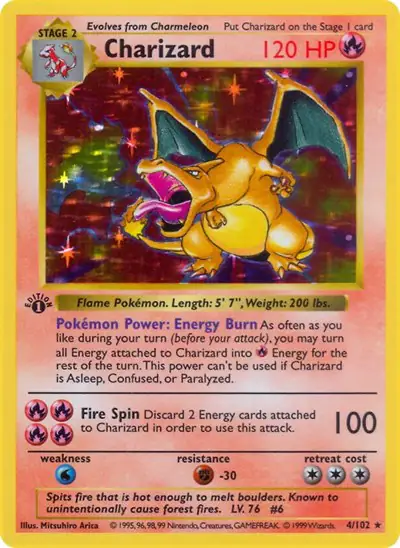
The Shadowless Base Set Charizard remains the holy grail for Pokémon collectors, commanding a staggering $10,000 price tag. Its legendary status stems from being part of the earliest English print run, lacking the shadow border that later editions featured. This card represents the beginning of Pokémon TCG history and combines extreme scarcity with Charizard's unmatched popularity among fans.
#2. Shining Tyranitar — Neo Destiny
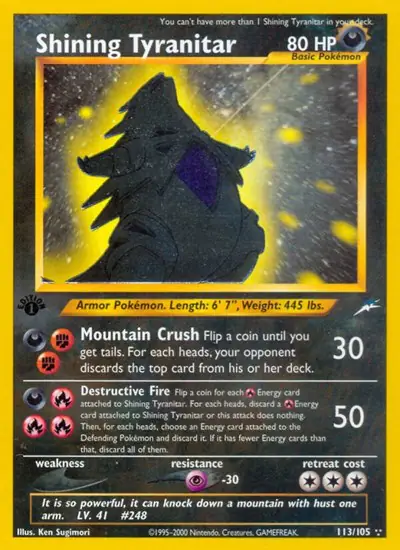
Neo Destiny's Shining Tyranitar is one of the original "Shining" Pokémon, a subset that introduced alternate-colored versions with incredible artwork. Limited to one per deck in competitive play and appearing at secret rare odds, this dark-type powerhouse has maintained its $4,249.99 value through decades of collector demand. The Shining series represented Pokémon's first major experiment with ultra-premium chase cards.
#3. Charizard Star (Delta Species) — Dragon Frontiers
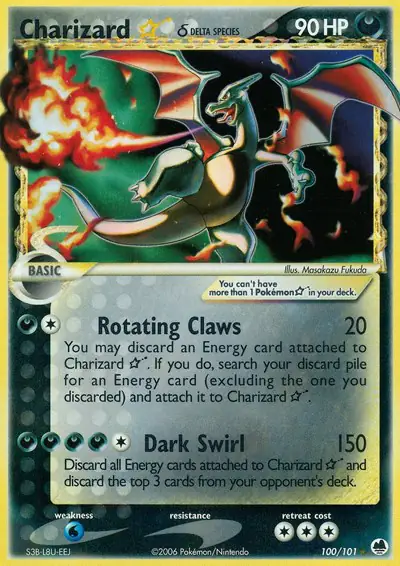
The Gold Star era produced some of the most coveted Pokémon cards ever printed, and this Delta Species Charizard exemplifies why collectors pay $4,000 for these rarities. Gold Star cards featured alternate typings and stunning full-art foil treatment, with pull rates so low that opening one was a genuine event. The Delta Species mechanic, which gave Pokémon unexpected types, makes this particular Charizard both mechanically and visually unique.
#4. Shining Charizard — Neo Destiny
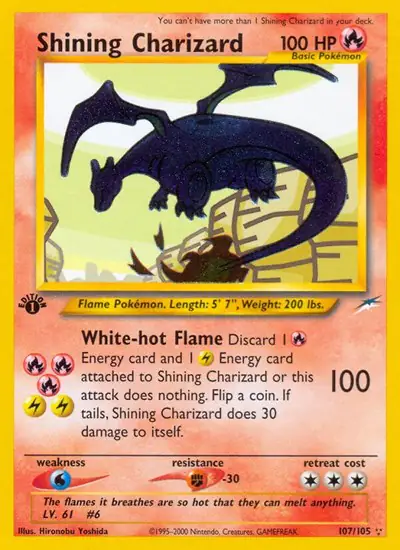
Another Neo Destiny giant, Shining Charizard sits just below its Tyranitar counterpart at $3,998.99. This card features Charizard in its black shiny coloration, a fan-favorite alternate palette that has driven demand for over two decades. As the flagship Shining card from Neo Destiny, it represents the peak of late Wizards of the Coast-era design philosophy.
#5. Pikachu Star — Holon Phantoms
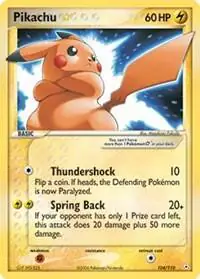
Pikachu's Gold Star card from Holon Phantoms brings together the franchise's mascot with the rarest card designation of its era. Valued at $3,200, this card showcases Pikachu in its golden shiny form with the distinctive star symbol that marked the ex-era's most exclusive pulls. Gold Stars appeared roughly once per two booster boxes, making any example exceptionally scarce.
#6. Rayquaza Star — Deoxys
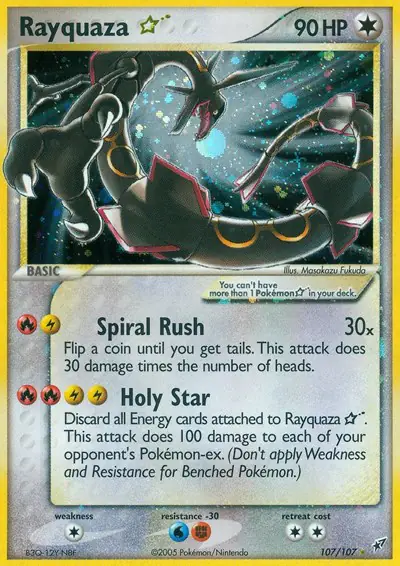
The Deoxys set's Rayquaza Gold Star captures the legendary dragon in its black shiny coloration, commanding $2,500.99 from collectors. As one of the earliest Gold Star cards released, it established the template for premium Pokémon collectibles. Rayquaza's popularity as a mascot legendary has only increased over time, driving sustained demand.
#7. Latias & Latios GX (Alternate Full Art) — SM - Team Up
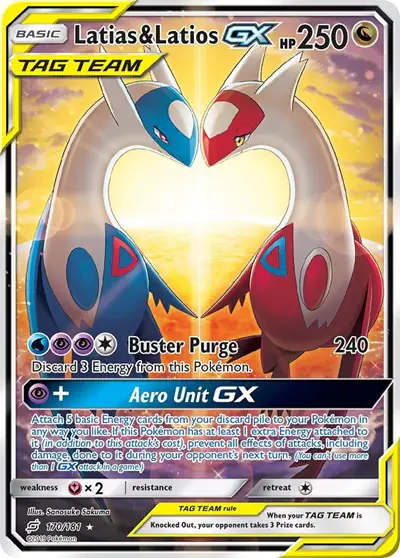
This modern alternative art card proves that new releases can compete with vintage prices, valued at $2,495.66. The alternate art versions from the Sun & Moon era featured completely reimagined illustrations rather than standard posed artwork. This particular card's breathtaking scene of the legendary dragon duo has made it the crown jewel of modern Pokémon collecting.
#8. Charizard — Skyridge
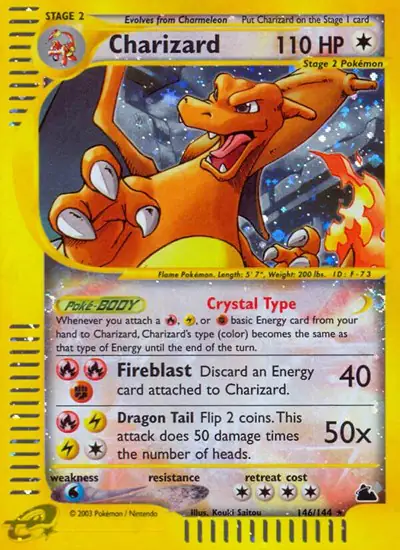
Skyridge, the final Wizards of the Coast Pokémon set, produced this secret rare Charizard now worth $2,400. The set's limited distribution and status as a series finale created inherent scarcity. Crystal-type cards like this featured reverse holofoil backgrounds and unique mechanics, making them both visually distinctive and historically significant.
#9. Latias Star — Deoxys
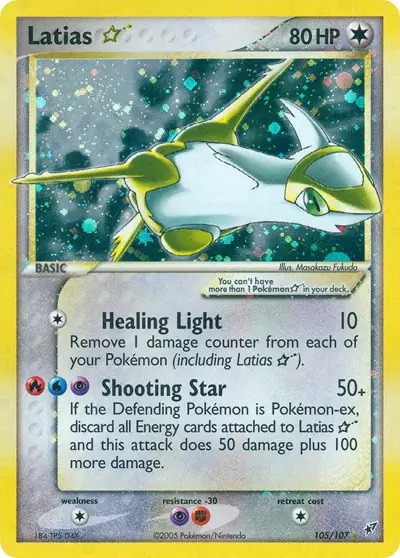
Latias joins its counterpart Rayquaza from the Deoxys set with a $2,300 valuation. Gold Star cards from early ex-era sets are particularly prized because they represent the format's original vision before Gold Stars became slightly more common. The eon duo's popularity among fans of Generation III has helped maintain strong collector interest.
#10. Treecko Star — Team Rocket Returns
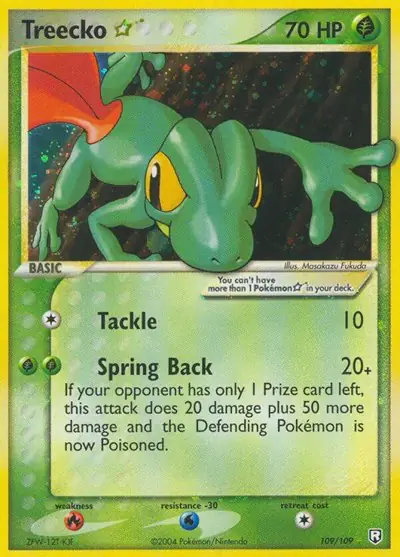
An unexpected entry at $2,250, Treecko Star demonstrates that starter Pokémon can command premium prices even when they're not Charizard. This Gold Star appeared in Team Rocket Returns, a set with relatively low print numbers. Treecko's appeal to Hoenn-region fans and the general scarcity of Gold Star cards combine to drive its remarkable value.
#11. Lugia — Aquapolis
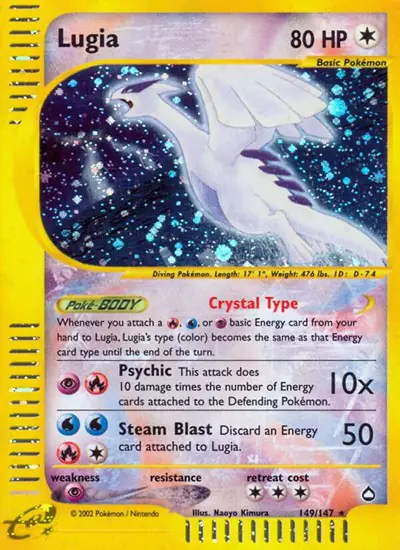
Aquapolis's secret rare Lugia represents the peak of Wizards of the Coast's experimental design phase at $2,225. The Aquapolis and Skyridge sets featured crystal-type Pokémon with elaborate holofoil patterns and unique game mechanics. Lugia's status as a Generation II legendary mascot ensures sustained collector interest across generations.
#12. Kyogre Star — Delta Species
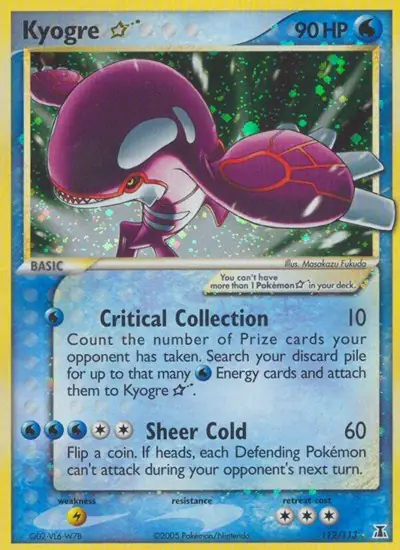
The Delta Species set's Kyogre Gold Star commands $2,100.98 thanks to the convergence of Gold Star rarity and legendary status. Delta Species cards gave Pokémon unexpected typings, with this Kyogre featuring unique artwork that emphasized its experimental nature. The set's lower print run compared to standard releases amplifies scarcity.
#13. Pikachu - 5/5 — Kids WB Promos
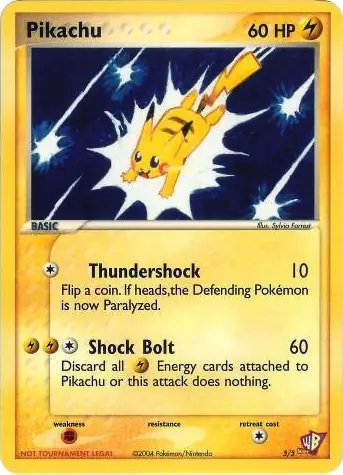
This Kids WB promotional Pikachu, valued at $1,999.99, represents the extreme scarcity of early promotional distributions. These cards were obtained through limited-time offers tied to the Pokémon television broadcasts, creating small distribution windows. Promotional cards from the Wizards era are notoriously difficult to find in pristine condition.
#14. Espeon Star — POP Series 5
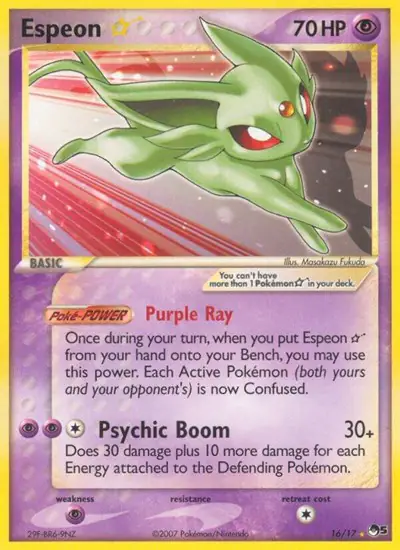
POP Series packs were distributed through league play and special events, making this $1,900 Espeon Star particularly scarce. Gold Stars in POP packs appeared even more rarely than in standard booster sets. Espeon's popularity among Eeveelution collectors creates consistent demand for this elegant psychic-type.
#15. Umbreon VMAX (Alternate Art Secret) — SWSH07: Evolving Skies
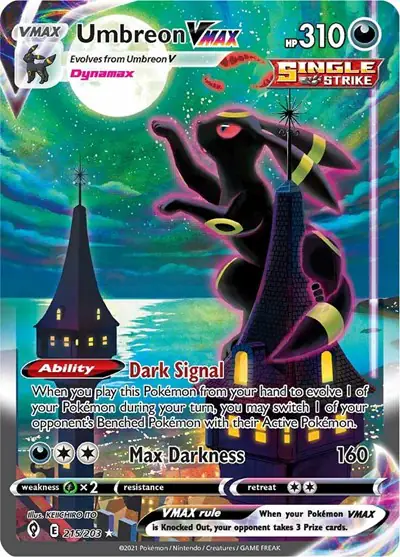
Closing out the list is Evolving Skies' Umbreon VMAX alternate art at $1,878.20, proving that modern cards can achieve vintage-level prices. Alternate art cards from Sword & Shield sets feature illustrators' unique visions rather than standard CGI renders. Umbreon's massive fanbase and Evolving Skies' notoriously low pull rates for alternate arts have created extraordinary demand.
These fifteen cards reveal a collector market that values both historical significance and artistic excellence. Whether through vintage scarcity, Gold Star designation, or modern alternate artworks, the most expensive Pokémon cards share a combination of limited availability and enduring appeal that transcends simple gameplay value.